

When starting the year thinking about health improvements, many people focus on fitness or nutrition—but oral health plays an equally important role in overall well-being. If you are missing one or more teeth, choosing the right tooth replacement option can affect your comfort, confidence, and oral health for years to come.
Modern dentistry offers several ways to replace missing teeth, ranging from removable appliances to permanent dental implant solutions. Understanding how these options differ, and when each may be appropriate, can help you make a confident and informed decision.
Why Replacing Missing Teeth Matters
Missing teeth affects more than appearance. When a tooth is lost, the jawbone beneath it no longer receives stimulation from chewing. Over time, this can lead to bone loss, shifting of surrounding teeth, changes in bite alignment, and even changes in facial structure.
Replacing missing teeth helps support proper chewing, clear speech, and long-term oral health. The right solution is not simply about filling a space but preserving function, stability, and comfort over time.
Replacing a Single Missing Tooth: Your Options
Many patients begin exploring tooth replacement options when they are missing just one tooth. In these cases, two common solutions are often considered.
Single Removable Denture Tooth
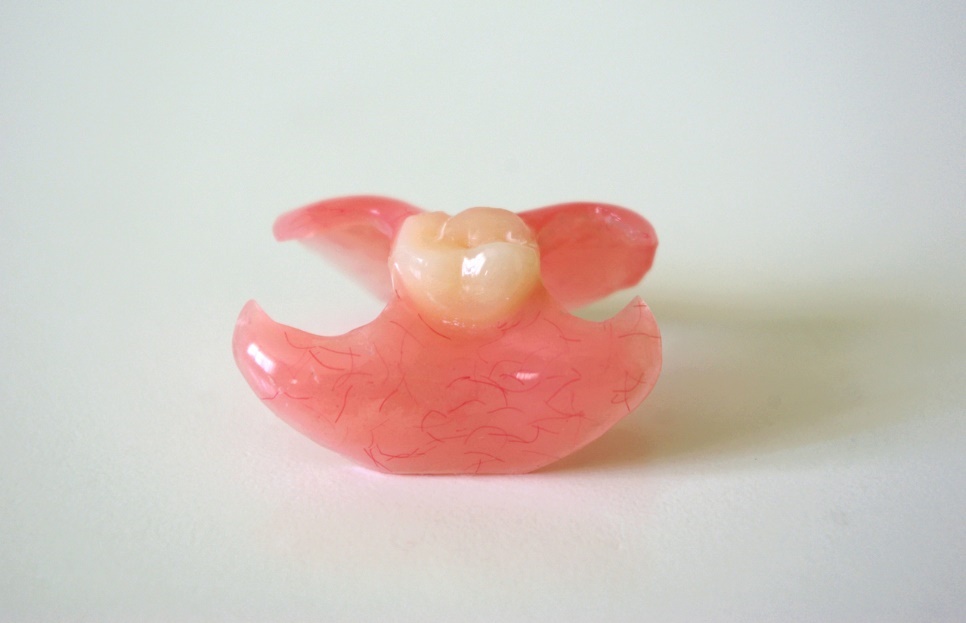
A single removable denture tooth, often called a flipper, is an appliance designed to replace one missing tooth. It can be removed by the patient and is commonly used as a temporary solution.
This option may be considered after a tooth extraction while healing takes place, when a patient is not yet ready for a permanent replacement, or when affordability is a primary concern.
While a single removable denture tooth can improve appearance, it does not stimulate the jawbone. Over time, lack of stimulation may contribute to bone loss and movement of nearby teeth. These appliances may also feel less stable during eating or speaking and often require adjustments.
Single Dental Implant
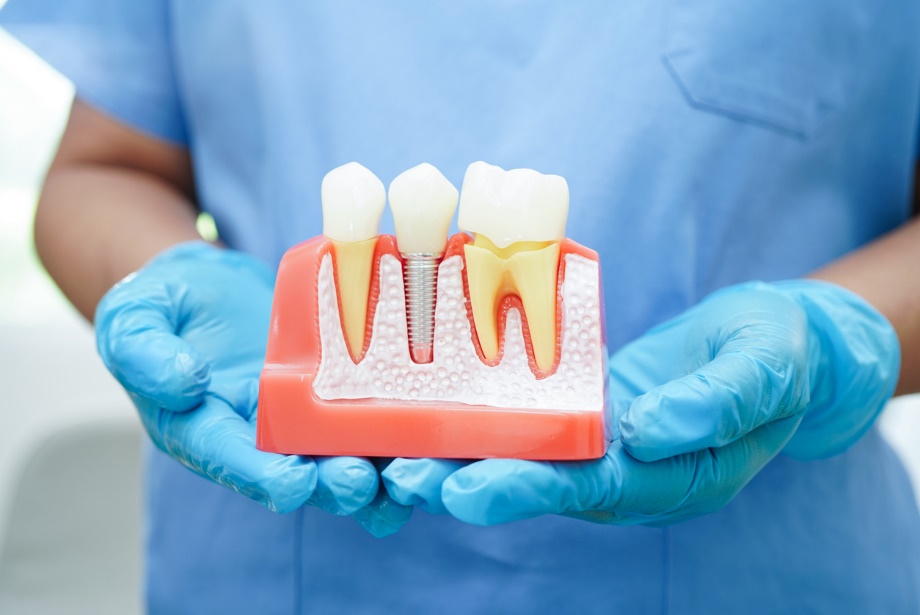
A single dental implant is considered the most stable, long-term solution for replacing one missing tooth. The implant post is placed into the jawbone, where it integrates with the bone. A custom crown is then attached to restore appearance and function.
Unlike removable options, a single dental implant is fixed in place, stimulates the jawbone to help maintain bone density, and functions much like a natural tooth. It also stands independently, without relying on neighboring teeth for support.
Replacing Multiple Teeth or a Full Mouth
When multiple teeth are missing or when an entire arch of teeth needs to be replaced, implants offer reliable, long-term options.
Removable Implant Dentures
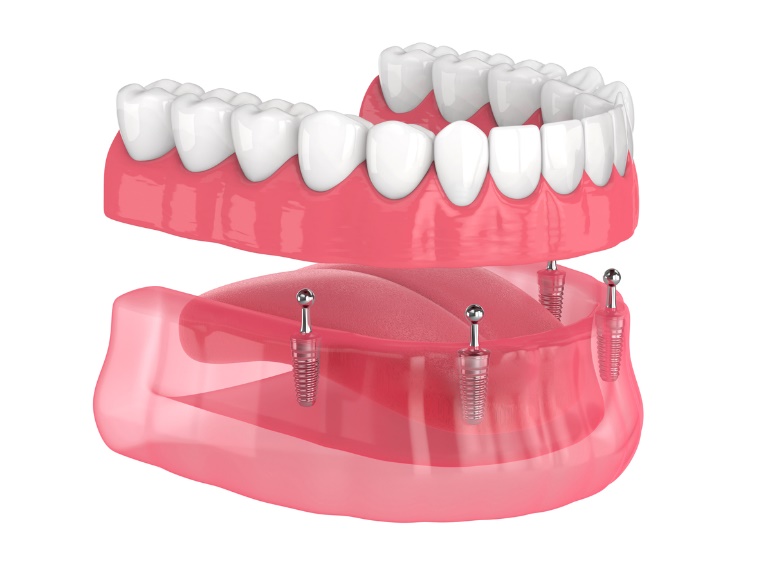
Removable implant dentures, also known as implant-supported overdentures, attach to dental implants placed in the jawbone but can still be removed by the patient. These dentures typically snap onto two to four implants, providing more stability than traditional dentures.
Patients may choose removable implant dentures because they offer improved retention compared to conventional dentures and may require fewer implants than fixed solutions. However, they still rely on a denture base, which must be removed daily for cleaning, and may experience some movement during chewing. Over time, attachment components may wear and require maintenance.
Full Mouth Fixed Dental Implants
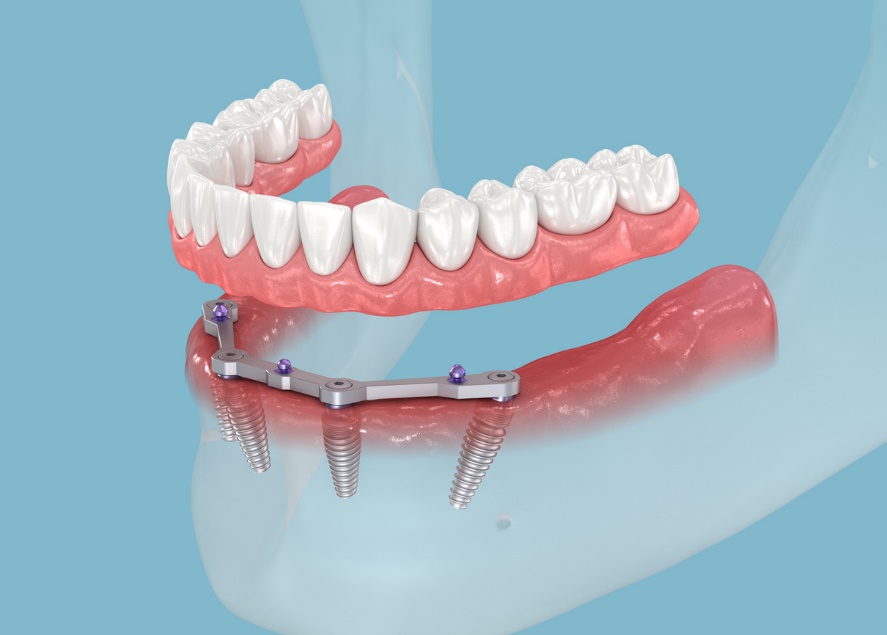
Full mouth fixed dental implants are a permanent solution designed to replace many or all teeth in the upper or lower jaw. These restorations are secured to dental implants and are not removable by the patient.
Full-arch implant restorations may include a gum-colored portion along with replacement teeth. They are carefully designed to allow access for daily cleaning and professional maintenance. When properly cared for, full mouth dental implants provide excellent stability, strong chewing function, and long-term support for jawbone health.
Why Dental Implants Are Often the Better Long-Term Solution
Across both single-tooth and full-mouth situations, dental implants offer important advantages. Dental implants provide greater stability, help preserve jawbone health, feel more natural during daily activities, and are designed for long-term durability with proper care.
While removable solutions may be appropriate in certain situations, dental implants are designed to support oral health, comfort, and function over the long term.
Is One Option Right for Everyone?
Every patient’s needs are unique. Bone health, medical considerations, lifestyle, and budget all play a role in determining whether dental implants or removable implant dentures are the best option. Some patients may begin with a removable solution and later transition to implants, while others may be ready for a permanent solution from the start.
A professional dental evaluation allows your dentist to explain your options and recommend a treatment plan that aligns with your goals.
Making a Confident Choice for the Year Ahead
Replacing missing teeth is an investment in your comfort, confidence, and long-term oral health. By understanding the differences between single removable denture teeth, removable implant dentures, and full mouth dental implants, you can make an informed decision that feels right for you.
At Amazing Dental Solutions, we specialize in dental implants, including full mouth dental implant solutions, and help patients choose the option that best supports lasting oral health.
Frequently Asked Questions About Dental Implants
- Are permanent dental implants hygienic, including full mouth dental implants?
Permanent dental implants, including full mouth fixed implant restorations, are designed to be hygienic when properly cared for. While full-arch implant restorations may replace a larger area of teeth and gums, they are carefully designed to allow daily cleaning around the implants. Healthy gums form a seal around the implants, and regular professional cleanings help maintain long-term oral health. When properly maintained, dental implants do not trap bacteria and are often more hygienic than removable dentures. - How do you clean dental implants?
Dental implants are cleaned using daily brushing along the gumline and cleaning between teeth with floss, interdental brushes, or a water flosser. Your dentist may recommend specific tools depending on your implant type. Regular dental checkups and professional cleanings are important for maintaining gum health around implants. - Can dental implants develop gum disease?
Dental implants cannot decay, but the surrounding gums and bone can become inflamed if plaque is not removed. This condition, known as peri-implant disease, is similar to gum disease around natural teeth. With proper oral hygiene and routine dental care, the risk can be greatly reduced. - How long do dental implants last?
With proper care, dental implants are designed to last many years and often decades. Their longevity depends on oral hygiene habits, overall health, and regular dental visits.