

Have you noticed that your front teeth look shorter than they used to? Maybe the edges have become uneven, or you can see small chips that were not there a few years ago. You might even find that certain foods are becoming uncomfortable to chew.
These changes often happen gradually. You may not realize how much your teeth have worn down until you compare your smile with an older photograph or begin experiencing sensitivity.
At Amazing Dental Solutions in Houston, Dr. James Amaning wants to understand how these changes are affecting your life. Are you having trouble chewing? Do your teeth hurt? Have you become uncomfortable smiling in photographs? Your answers help us understand what matters most to you and how we may be able to help.
What Causes Teeth to Wear Down?
Teeth are designed to withstand years of chewing, but certain habits and conditions can gradually remove enamel and damage the underlying tooth structure.
Teeth Grinding and Clenching
One of the things we look for when examining worn-down teeth is evidence of grinding or clenching, a condition known as bruxism.
You may grind your teeth at night without knowing it. Perhaps your spouse has mentioned hearing grinding sounds while you sleep, or you wake up with a sore jaw. Others clench their teeth throughout the day, especially when concentrating or dealing with stress.
Over time, grinding can flatten the biting surfaces, create small cracks, and wear away protective enamel. Clenching can also place excessive pressure on teeth and contribute to damage.
The American Dental Association explains how teeth grinding and clenching can damage teeth, sometimes before a person realizes there is a problem.
Signs of teeth grinding and clenching may include:
- Flattened or unusually smooth chewing surfaces
- Small chips or cracks in the teeth
- Jaw soreness or morning headaches
- Increased tooth sensitivity
- Worn or damaged dental restorations
Sometimes the first indication of grinding is the wear we see during a dental examination. Identifying the cause is important because the same forces that damaged your natural teeth may also damage new restorations.
Acid Erosion and Other Causes
Frequent consumption of acidic beverages, including soda, sports drinks, and citrus juices, can gradually dissolve tooth enamel. Stomach acid from frequent acid reflux or vomiting can cause similar damage.
Brushing too forcefully or using abrasive toothpaste can contribute to tooth wear, particularly near the gumline. Excessive biting forces may also damage teeth.
During your examination, we look at where the damage is occurring and what the tooth surfaces look like. These details help Dr. Amaning identify possible causes and determine how to protect your remaining tooth structure.
Signs Your Teeth May Be Wearing Down
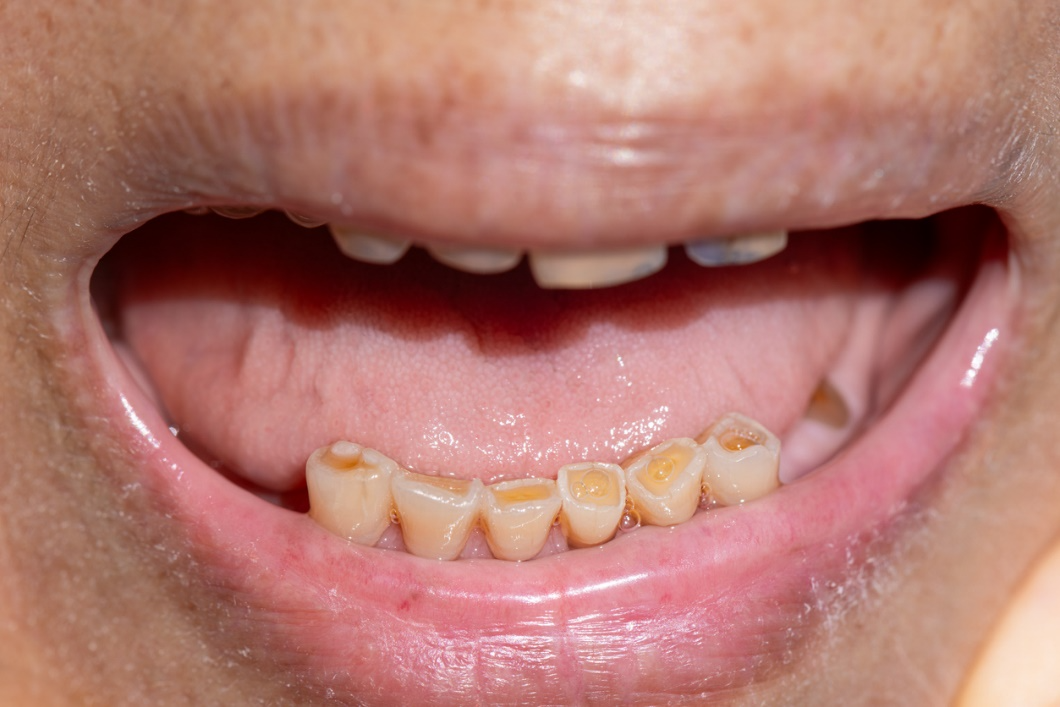
Worn-down teeth do not always hurt. You may notice changes in your smile long before you experience discomfort.
Common warning signs include:
- Teeth that appear shorter or flatter than before
- Chipped, uneven, or rough biting edges
- Sensitivity to hot, cold, or sweet foods
- Yellowish areas where enamel has thinned
- Changes in how your teeth fit together
- Difficulty chewing comfortably
Perhaps you have started chewing on one side of your mouth because the other side feels uncomfortable. Or you have become self-conscious about smiling because your teeth look uneven.
We want to hear about these changes because restoring your smile involves more than repairing damaged teeth. It also means understanding what you want to improve.
Can Worn-Down Teeth Be Repaired?
In many cases, yes. Although lost enamel cannot grow back, several dental treatments can restore the appearance and function of worn-down teeth.
That does not mean every worn tooth needs a crown or another restoration. Minor wear may require only monitoring and preventive care, while more extensive damage may benefit from restorative treatment.
Dr. Amaning will examine your teeth, evaluate your bite, and discuss what may be causing the damage. Just as importantly, he will ask what you hope to change.
For some patients, the priority is chewing comfortably again. For others, it is restoring the appearance of their front teeth. Often, both concerns are important.
Treatment Options for Worn-Down Teeth
There is no single treatment that works for every person. Some patients need only a small repair, while others have more extensive damage that affects how their teeth look and function. At Amazing Dental Solutions, we consider how much tooth structure has been lost, what caused the wear, and what you hope to achieve.
Dental Bonding
If your front teeth have developed small chips or uneven edges, dental bonding may help restore their shape. We use tooth-colored composite material to rebuild damaged areas, often without removing much, if any, healthy enamel.
Bonding can be a conservative solution for minor damage, although it may not be appropriate for teeth exposed to heavy grinding forces.
Dental Crowns
When a tooth has become significantly worn, cracked, or weakened, a dental crown may provide better protection.
A crown covers the visible portion of the tooth, restoring its shape and helping it withstand chewing forces. Before recommending one, Dr. Amaning evaluates how much healthy tooth structure remains and how your teeth come together when you bite.
Porcelain Veneers
If worn front teeth have changed the appearance of your smile, porcelain veneers may be an option. These thin restorations are bonded to the front surfaces of teeth to improve their shape and appearance.
However, veneers are not suitable for every situation, particularly when extensive wear or uncontrolled grinding places excessive stress on the teeth.
Full-Mouth Reconstruction
Years of severe grinding can sometimes leave multiple teeth shortened, weakened, or damaged. You may have difficulty chewing certain foods or feel that your bite no longer fits together comfortably.
In these situations, Dr. Amaning may recommend full-mouth reconstruction, which combines restorative treatments to rebuild damaged teeth and improve how they function together.
With our on-site dental laboratory and advanced digital technology, Dr. Amaning can remain closely involved in planning and creating restorations designed for your individual smile.
We understand that extensive dental treatment is a significant decision. Dr. Amaning will explain what he finds, discuss the available options, and help you understand what each approach could accomplish.
Protecting Your Teeth from Further Wear
Restoring worn-down teeth is only part of the solution. We also want to help prevent the same damage from happening again.
Depending on the cause, Dr. Amaning may recommend:
- A custom nightguard to help protect teeth and restorations from nighttime grinding.
- Reducing daytime clenching by becoming more aware of jaw tension.
- Addressing acid exposure, including dietary habits and acid reflux.
- Gentle brushing habits to help protect remaining enamel.
- Regular dental examinations to monitor wear and identify new problems.
Our goal is to help you maintain healthier teeth and enjoy the benefits of your treatment for years to come.
Let’s Talk About Your Smile at Amazing Dental Solutions
Maybe your teeth have become shorter and more sensitive. Perhaps you have been living with chipped teeth because you assumed nothing could be done. Or you may be concerned that years of grinding have caused damage that will only get worse.
At Amazing Dental Solutions in Houston, Dr. James Amaning believes your dental care should begin with a conversation. We want to understand your concerns, explain your options, and help you make decisions that are right for you.
You may be surprised by what can be done to restore worn-down teeth, and the solution may be simpler than you think.
Contact Amazing Dental Solutions to schedule an examination. Let’s find out what is causing your tooth wear and explore how we can help you smile and eat more comfortably.